Lost Judgement

Lost Judgement is a game by Ryu Ga Gotoku Studio that is a sequel to the original Judgement in story and gameplay. It’s not strictly necessary to have played the first Judgement in order to understand this one, but if you do plan on playing the first at some point, you should do so before playing this one because this game naturally spoils a lot of plot events in it’s prequel.

It is also important to note that this is set in the same universe as and takes place after Yakuza 7: Like a Dragon. It’s definitely not necessary to have played that before playing this, but central parts of the story of Lost Judgement spoil major twists in Yakuza 7. The story of Lost Judgement is more connected to Yakuza 7 than the original Judgement, wherein even if there’s almost no overlap in terms of characters between the two, Lost Judgement essentially serves as an epilogue to one of Yakuza 7’s core plot threads. Thus, I would highly recommend playing Yakuza 7 before playing this despite the two being in different subseries with completely different gameplay.

The story here follows detective and former lawyer Yagami as he pursues cases in Ijincho, Yokohama. The first case is relatively simple and involves searching for and dealing with bullying amongst students at Seiryo High School. However, this is only the prologue to a much larger case involving multiple murders and a a major man hunt by RK, one of the largest criminal organizations in Japan. In order to seek the truth behind the conspiracy, Yagami must call in the help of old allies, make new allies, and dive deep into the dark underbelly of Japan.

Overall, I felt the writing in Lost Judgement was very messy. It’s very typical Ryu ga Gotoku writing similar to the Yakuza games in terms of twists and turns. However, the Judgement games try to tackle much more complex subject matter. The first Judgement managed to do a decent enough job, but this one kind of felt like it was taking on more than it could handle. There was too much going on and as a result it just doesn’t come together all that well.

One of the strongest aspects of the first Judgement game was the incredibly cast of characters. They were all pretty well developed and got their moment to shine. Here, it felt like the cast was overtly bloated resulting in essentially no one getting enough time in the limelight. Part of that comes down to the heavy reliance on the characters from the previous game. Their stories are already finished and don’t directly have all that much to do with the plot of this game. Thus, the game doesn’t really do much with them, but at the same time them being core parts of the main cast prevents new characters more closely tied to the central narrative from filling those roles and from getting a larger focus. As such, neither the old nor the new characters get fleshed out properly.

Yagami is definitely the best returning character. As the protagonist, he’s still heavily focused on and that allows his strong sense of justice and quick wit to come across very well. However, it’s not like he really has any sort of character arc or development so he isn’t all that great of a protagonist this time around. The best new character was definitely Kuwana who was written pretty well with a great deal of complexity and he even served as somewhat of a foil to Yagami’s sense of values. However, he alone isn’t enough to hold up the cast. I was also really disappointed about how little of a role Mafuyu had in this game considering she was actually being set up Yagami’s romantic interest in the previous game, and I suppose that comes down to the script just simply not having enough room.

How Seiryo Highschool factors into things is also kind of strange. It’s a key location and is certainly important at the start, but then it just kind of fades out for the most part in regards to the main plot. There’s an extended side plot line called School Stories that is entirely centered around Yagami becoming the head of the Mystery Research Club and helping solve a case involving “The Professor” who’s secretly guiding various students into lives of crime. In dealing with that, he ends up making loads of allies which ultimately leads up to a grand finale type clash, similarly to the finale to the side cases in the first game. There’s a lot going on here and thus the writing is somewhat of a mixed bag, but on the whole it’s pretty good.

What’s strange is that this doesn’t cross over with the main plot at all. There are a few students that are important for the main plot but they have absolutely no role in the School Stories. And similarly, none of the many many characters involved in School Stories have any bearing on the main plot. The main plot related students are critical to the game from a thematic point of view, and the scene in the ending focused on them was actually the one that hit hardest for me. But they’re also woefully underdeveloped. The School Stories could have fleshed them out better, so everything being so disconnected was just bizarre.

The rest of the overarching plot is also lacking. The central theme throughout is bullying and the inability of society to deal with it. However, the game ultimately didn’t say anything much about the issue other than bringing it up and showing how hurtful it can be not just for the direct victim, but also for those around them. And it did most of that in the first third of the game. The rest just kind of repeats the same messages without really exploring it in any more detail, while also throwing around a lot of the standard generic concepts relating to vigilante justice and such.

The central mystery behind everything is decent enough, though not as good as the one in the previous game. But the biggest problem is the whole court set up just doesn’t make much sense. It just doesn’t make sense for Yagami to be on the side that he’s on as he’s essentially serving as a defense lawyer that’s trying to expose his own client. The writing has to tie itself into knots to try to make this work, and it still ends up feeling incredibly forced. The way things are ultimately resolved in the courtroom is especially abrupt, and the finale overall feels like the developers just trying to wrap things up somehow. Still, despite all the issues, all in all I would have to say I was satisfied with the ending. Mainly due to the parts involving the Seiryo cast.

The gameplay of Lost Judgement is pretty much the same as in the previous game. The combat is the typical Ryu ga Gotoku brawler fare. There are three styles this time around, with one additional as DLC, that give you a decent amount of variety and flexibility. It’s overall pretty basic, but flows well enough. It hasn’t really evolved at all over previous games, but it’s fun enough. I felt the bosses weren’t as well designed as previous games however, and the cinematic set pieces surrounding them were overall less epic. It does the job, but I don’t think it’s particularly memorable, especially if you’ve played a lot of the previous Ryu ga Gotoku games.

This game has the standard detective portions that involve Yagami inspecting areas in order to find clues and such. Beyond that there are also a bunch of new detective gimmicks, such as using a dog to sniff out clues or a bug detector. These aren’t particularly great but add some decent variety. They’re a lot better than the returning detective gimmicks (tailing, chasing, and sneaking) which are still just as boring and awful as in the previous game.

Exploration wise the game is set in Kamurocho and Ijincho. Neither have changed much compared to Yakuza 7. Ijincho is huge, which was a problem in Yakuza 7, but thankfully this game mitigates that by giving Yagami a skateboard that allows him to move pretty fast. The collectibles in this game are squirrel graffiti hints leading to various items, which are enjoyable enough to find. There are also various side quests that make use of Yagami’s detective skills that overall are decent enough. Only the School Stories really stood out though, with the only other extended side plot line, the Dastardly Detective, being pretty disappointing. Some of the side cases lead to girlfriends that Yagami can form a relationship with. This aspect felt pretty underdeveloped though with none of them having much to their stories or character arcs. They’re all pretty likable characters though for what its worth.

As usual for Ryu ga Gotoku, there are loads of mini-games. There is of course the standard small ones like batting cages, darts, and various arcade games. However, Lost Judgement in particular has a lot of mini-games with a lot of substance. Unfortunately, most of them aren’t good, and thus this is a case of quantity over quality. Most of them were just okay, such as the dancing, boxing, or skateboarding, with the biggest issue being that they didn’t have have enough content and substance to them. But some of them were also absolutely awful, such as the robotics or the motorbiking. The motorbiking mini-game is straight up one of the worst designed gaming experiences I have ever encountered. And thus on the whole, the mini-games and side content in general in this I would rate negatively.

The game is solid enough visually for a game also on PS4. It also runs really well on PS5. I did feel that there was an issue with a lot of characters having an uncanny valley to their faces when zoomed out. They look fine when they’re more zoomed in, so I suppose it’s a LoD issue. The music was also pretty good. The OP movie is solid in terms of the song and visuals. The ED just plays random music including the OP song and overall isn’t that significant, but is decent enough I suppose. The UI/UX is solid enough though definitely somewhat messy at times, and I liked how the game now has a conversation backlog.

A sequel that in terms of story is pretty good but not really evolved past it’s predecessor, and that in terms of story is somewhat weaker but still decent.

7/10

The Kaito Files is a DLC side story that takes place after Lost Judgement with Kaito now serving as the protagonist and taking a solo case without Yagami. The story is features Kaito discovering that an old flame who was thought to have committed suicide having had been seen walking around Kamurocho. He searches for her with her son, Jun, and finds that her past is significantly more complex than he expected.

This DLC has only the main story without any side cases or anything like that. As such, although it’s only about six hours long it still has a decent amount of story compared to what that length would get you in other Ryu ga Gotoku games. The length still felt too short for the story being told though, and in the end it definitely feels underdeveloped and rushed in a lot of ways. The mystery is also incredibly predictable. Still, overall it flows well, develops Kaito really well, and has a really good ending that breaks heavily from how Ryu ga Gotoku Studio usually ends such stories. The villain is also fantastic, in that he’s just straight up evil without anything complex about him which is actually pretty refreshing. Thus, all in all I was very satisfied with the game from a story point of view.

Gameplay wise, all there is is the main quest, so it’s mostly just combat without much exploration or any mini-games. Kaito’s combat is even more simplistic than Yagami’s, but it’s really weighty which makes it really satisfying. The bosses were pretty lacking though, with only the final (real) boss having any pizazz at all. Also, stealth, chase, and tailing missions also unfortunately return and are still terrible. In terms of production values it’s pretty much the same as the main game. The soundtrack is also pretty much the same. Though there’s no OP video, and the ED is just white text on black.

A decent enough short and to the point bonus story.

7/10
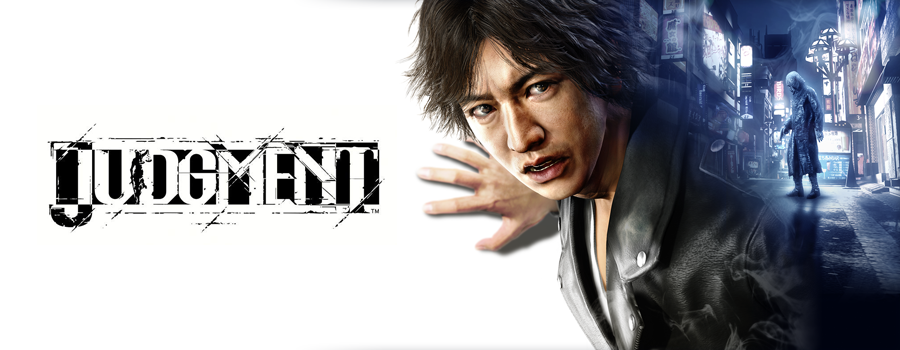
Judge Eyes (Judgement)

judgement

Takayuki Yagami is a lawyer at the height of his career. He was the lawyer for Shinpei Okubo who was prosecuted for the murder of a patient at the Advanced Drug Development Center (ADDC). It seemed an open and shut case where Okubo was clearly guilty. However, Yagami managed to successfully defend him and obtain a not guilty verdict, an incredibly rare occurrence in Japan’s justice system. However, not long after, Okubo was charged and declared guilty of murdering his girlfriend. Plagued by guilt due to blaming himself for her death, Yagami retired as a lawyer and became a detective in Kamurocho along with his friend and former yakuza Kaito. In addition to taking various requests, he continued working with his former employer, Genda Law Office, on gathering evidence for their cases, but declared his days as a lawyer were over.

However, when the office picks up a case where they are to defend a man named Hamura from a murder charge, things get immensely complicated. Hamura is the captain of the Matsugane clan, the clan Kaito used to be a part of before he was exiled, and the clan whose patriarch had essentially been Yagami’s father since the death of his parents. Hamura is charged with being what Yagami dubs the Mole, a mysterious serial killer that had killed a string of yakuza from the Kyorei clan and gouged out their eyes. Yagami working with the Genda Law Office attorney Shintani manage to get Hamura found not guilty. However, that is just the beginning as Yagami continues searching for the Mole. This search takes him all over Kamurocho and beyond, bringing him into contact with various others he makes enemies of and comes to rely on, ultimately revealing a major conspiracy with it’s core at the same ADDC that resulted in Yagami’s downfall and a the development hub of a world changing drug known as AD-9.

***

Judge Eyes, titled Judgement in the west, is a title from Ryu Ga Gotoku studio, the developers of the Yakuza series. At first look it could be seen as a spin off of the Yakuza series. It takes place in Kamurocho, the fictional district that serves as the main setting of all the Yakuza games. It clearly takes place after Yakuza 6, with major events from that entry still leaving their mark. Yakuza conflicts and politics are still incredibly important. There are a few minor characters from the Yakuza games that are present in this one. And it’s an open world game with brawler combat similar to previous Yakuza entries. However, calling it a spin-off would be oversimplifying it, as rather than a spin-off the game has enough substance to it and is different enough from the Yakuza games to stand as the beginning of a new series in the Yakuza universe.

One of the reason that Judgement stands out so strongly is it’s cast of character’s and main story. The main character’s in this entry don’t overlap with the character’s from the Yakuza series at all. Furthermore, the cast is wide enough with enough depth to stand completely on their own as the foundation of their own franchise. The protagonist Yagami is an amazing character. He has a strong sense of justice rivaling that of Kazuma Kiryu. However, Yagami is a former lawyer instead of a former yakuza, and that manifests in him being much more logical and trying to solve issues in a more elaborate fashion rather than with just force. He’s also incredibly witty which manifests both in serious and humorous wordplay. All this makes him an incredibly likable and memorable character with a strong personality, but just as importantly his role as a detective in Kamurocho puts him in the perfect place to allow a character like him to shine. He naturally ends up dealing with lots of subterfuge and conspiracy, both small and big, that involve quick thinking and a reasoned approach to solve and that naturally help lots of people. The way his story flows combined with his personality makes him feel kind of like Akiyama, but with what was best about him even more strongly emphasized.

Yagami himself is just the beginning though, because just as important is how he stands at the center of a pretty complex web of relationships. He has connections to the prosecutors office due to his love interest Mafuyu being a part of them, connections to the Genda Law Office he was formerly employed by, connections to the Matsunage yakuza family due to how he was taken in by their patriarch and how his partner Kaito was a former member. And on a personal level, he has connections to the people he defended in court and the people that were affected by him defending them in court as well as the people he takes detective cases from and the people affected by him taking said cases. All of these groups and characters are all deeply connected to the plot of the game and how they ultimately end up playing a key part in the story and how they all come together around Yagami is a plot device that works incredibly well. A core theme in this game felt like it was personal bonds, wherein while Yagami was the center of the story, the story was just as much of the team he assembled around him. The narrative does a good job of building the connections of all these characters to Yagami and ultimately the series of bonds built up feels incredibly strong. No singular bond is fleshed out to an incredible degree, as Haruka was for example in previous Yakuza games, but holistically it feels like the main cast is incredibly well developed. Even though none of the other characters were playable, the core team still felt like the most interesting team established in all the games in the Yakuza universe, which I think is a really amazing accomplishment, and one that results in me anticipate more from them in future entries.

The story itself is also really interesting. What it does best, as previously mentioned, is let the entire cast shine through and explore their background, motivations, and connections. But the plot itself is pretty solid in its own right. It starts off seeming somewhat small scale in dealing with a detective helping out in the investigation of a serial killer in a single district of Tokyo, but eventually grows to a major conspiracy that feels like it’s Yagami against the world. It does feel like there are some plot holes as well as lots of things that are almost plot holes but were forcibly written around into not being plot holes. However, overall the story still felt pretty consistent with good twists that were built up to properly, too properly arguably as most all the major twists were pretty easy to predict. The narrative also explores a lot of interesting topics including specific ones like what the responsibility of lawyers is as well as more broad ones such as whether the ends justify the means. What I thought was interesting about the narrative regarding these is that though the plot ultimately negated the impetus behind why these issues were brought into the forefront in the first place, the game made sure to make a clear statement about where it stood on these before that occurred. Lots of stories bring up complex topics but then write around having to actually say something about them, but here the writing made sure to say something and say it loudly, which was handled well and led to some really impactful moments where character’s personalities came through incredibly strongly.

In terms of game play Judgement still has the same core aspects of combat and exploration. However, they play less of a role in the game because it adds a lot of smaller core elements. The combat is very similar to the Yakuza games, in that it controls and flows the same way. There are two styles that can be switched at any time by pressing down on the D-pad. These two styles are Tiger, which has a more narrow focus on a single enemy, and Crane, which has more range and has attacks that hit enemies in a larger area. The player must use those to dish out combos while watching from attacks from other enemies that need to be either blocked or dodged. Instead of a Heat gauge as in the Yakuza games, there’s an EX gauge that serves the same purpose of being a bar that fills up through using other moves that allows the player to either use special moves or enter a powered up form.

Overall, it feels more fast flowing than previous games and the differing styles do offer a decent amount of flexibility, but overall I’d still have to say that as far as Yakuza game combat systems go it’s pretty middling. The bosses especially felt pretty weak compared to previous entries. There were a couple unique elements beyond that though. The first is mortal wounds, which are caused by firearms and bosses at certain times. These can’t be healed through normal means like standard items or eating, and must be healed through visiting the doctor or special items, both of which are very expensive. This adds a certain level of danger to certain encounters and certainly makes firearms more dangerous, but the system still felt kind of lacking. I understand the need to prevent cheesing through items as has always been common in Yakuza. However, this system never really prevented that because the fatal damage was never that major, but still annoying to deal with in the aftermath. A better system I believe would be one where a lot more fatal damage can be dealt out if not dealt with properly, but with it resetting after each encounter rather than having to deal with it through expensive means. Another unique element was extracts, which are items that can grant power ups that can alter combat quite a bit such as by speeding up combos tremendously or even adding new moves. Unfortunately, the system surrounding that involved essentially synthesis, but with items that you have to go out of your way to find, which made experimenting with it quite annoying and thus not a system that felt like it was worth using heavily.

Before exploration I’d like to talk about the other core elements. The first is chase missions that are incredibly similar to Yakuza 4 and are decent enough. You simply run after something in a linear fashion while dodging obstacles and occasionally having quick time events. They’re not particularly fun but they’re quick enough that even if they’re all the same it isn’t much of an issue and they help with pacing. Another core element in the lock picking mini-games. These are basically just mini-games that check your finesse in moving the analog sticks in a couple ways. They’re not particularly challenging and are also all the same, but are simple and quick enough that they aren’t annoying and feel like they help with pacing.

Next, there’s the tailing system. That involves having to follow someone or a group of someone’s discreetly. What that means is that every so often they turn around and if they spot you a gauge goes up depending on how conspicuous you are, which is based on whether you’re moving and how close you are, wherein if the gauge reaches it’s maximum the mission fails. These missions were downright terrible. They’re not difficult in the slightest. They’re all incredibly similar. And they all take a really long time. They just feel like an incredible waste of time that completely breaks the pacing. I don’t know if tailing missions can be made fun or even bearable as they’re almost always awful, but since they’re probably going to remain a core part of the games considering how important they are to the story, I hope they figure it out.

The last of the smaller core elements is investigations. These vary to a degree, but they all generally involve looking around in first person in order to find things. The problem with these is that they’re almost never really investigations where you need to properly consider what you’re looking for and carefully examine what you do find. Rather, they’re more just looking around randomly until you find whatever you’re looking for and then the plot moves on by itself. There’s a side case about a bandit in a mascot costume that really stood out because while the core of it was this investigation element, it felt like the only instance of the game where it actually did it properly, in that it involved an actual investigation where a lot of evidence is presented to the player and they have to use that to make choices on what they believe happened. As it is, the various investigation are basically just putting the player into a detectives shoes superficially without actually asking anything of them, but the system has the potential to be so much more so I certainly hope they capitalize on that in the future.

Next comes exploration. The only area in this game is Kamurocho, and a Kamurocho that doesn’t seem to be any different from where Yakuza 6 left off, which I already felt was getting kind of boring. Thus it’s incredibly familiar and comfy, but simply running around is still kind of boring. This is made worse by how it feels like random enemy encounters are a lot more annoying than previous games. On top of that there’s a system where the Keihin Gang, the main antagonist when it comes to the side content essentially, comes out in full force which increases the concentration and makes things even more annoying. To be honest, I don’t think I like simply running around in Kamurocho anymore, certainly not anywhere near as much as I did in previous games. Still, seeing everything from the perspective of a detective was a very good change of pace, so even if running around wasn’t that interesting, Kamurocho itself was still really interesting.

The core of that of course is the side content. Yagami gets various cases where he helps out various people as a detective. These involve the same core game play as the main story though they’re generally more lighthearted, though it should be noted that as a whole they still get nowhere near as crazy as the side missions in the Yakuza games did. In addition to that, and often connected to the side cases, are friend missions. There’s a lot of variety to these, some being based on mini-games, some being based on combat, some being based on purchasing certain items, etc. But they all generally involve helping someone out with something related to the role they serve in Kamurocho. I felt this really made the city come alive. The end of all these is a side case where all of these friends help out Yagami when the rest of the city turns against him. To an extent, this felt like a weaker version of the finale of the main story where the same thing happens but the relationships established in the side content are as expected weaker than those from the main game so that shouldn’t be surprising. Still, there’s something to the themes from the main story also carrying over to the side content and something pretty awesome about there being a finale to the side content, so all in all I would say it did land well. Thus, I would have to say Kamurocho still has enough to make exploring it quite interesting when its from a new perspective, though I would like to see new areas in future games.

Unfortunately, beyond that there were major issues with the side content that overall made it feel kind of lacking. The biggest issues is that it felt lacking in variety. While there is a lot of content to the friend missions and side cases, they all mostly involve the core game play elements also found in the main story. There’s nothing like clan creator or hostess management. A lot of the smaller mini-games from Yakuza are back such as the batting center or darts. However, they barely tie into the friend missions or side cases and there’s not really any progression to them. There are some pretty major new mini-games with Drone Racing, which is pretty fun in and of itself as it’s fast paced 3D racing and also because it has a decent upgrade system, and Kamurocho of the Dead which is a rail shooter House of the Dead spin-off. But these essentially have no story to them and not that much content either. The existence of major side activities isn’t as necessary because there’s a lot more variety to the game play in the main story and thus pacing is fine without it, but after having had something strong in the past few entries it feels lacking not to have one. There not being any silly side activity seems a result of the more serious tone in this game compared to past entries, but it’s presence is missed nevertheless. Also, karaoke being missing also feels like it’s leaving a major hole, in that sure it may not be important at all, but it felt like a core part of the games nevertheless.

The hostess clubs are gone too and are instead replaced by just normally dating girls found around Kamurocho. This involves completing a side case or series of side cases involving them, after which you can call them and go on dates where you make choices that increase a relationship bar that after a series of story events ultimately results in them confessing their feeling and the player choosing whether to go out with them or not. This sounds good in theory because it allows for more variety. However, there’s a major issue that makes this system not really work at all. While the dates with hostesses was portrayed as just playing around, the girls here are taking things much more seriously. This obviously runs into the issue that going out with all the girls just seems like a complete mess. The game seems to kind of write around that in that technically Yagami isn’t going out with them until the end of their story where they confess to him and that he can reject them at that point, it’s clear where things are going before then, and one of the girls story lines is straight up trying to get her to open up and admit she likes Yagami, so to reject them at the end feels incredibly off. That there is some inner monologue where Yagami berates himself for cheating if he’s already going out with one of them makes everything even more weird. Especially as Yagami actually has a canon love interest in the main story so it would be pretty much cheating regardless. But that even further brings into view how these are just side stories and will have no presence in future entries despite them being pretty major story wise. I like having such a system and want it present in the next entries, but they’ll have to figure out how to make it work.

The graphics were incredibly solid. Character models, especially their faces and how they expressed themselves were incredible and definitely enhanced the experience. The animation overall felt like a step up. The OP was great and did a really good of introducing everything without spoiling anything while also having a great song that ultimately fit the game incredibly well. The soundtrack was also pretty solid, but the tracks during the finale especially deserve to be noted as great.

A game that’s is more than just a Yakuza spin-off and that has a lot of potential in it’s incredibly strong cast and story, but that still has a lot of rough edges in the game play department.

8/10